Virumaametall

Virumaametall

Metal machining, welding and steel fabrication

This site describes the main methods used in metalworking: how parts are cut and shaped, how metal pieces are joined by welding, and how load-bearing steel structures are made. It also gives contact details for VIRUMAA METALLITÖÖD OÜ in Jõhvi, Estonia.

Read more
About

Metalwork in Ida-Viru County

VIRUMAA METALLITÖÖD OÜ is a company registered in Estonia on 14 February 2020, located at Narva mnt 34 in Jõhvi.

Its field is general metalwork: machining of parts, welding, and the fabrication of metal structures. These three areas are closely linked. A frame for a building or a machine usually needs cut and drilled parts, welded joints, and a finished surface before it can be used.

The sections below explain each step in plain terms, so that anyone planning a metal part or structure can understand what is involved and which questions are worth asking before work begins.

Machining

Mechanical processing of metals

Machining means removing material from a metal blank until it has the required shape and size. The most common operations are turning, milling, drilling and grinding.

  • Turning — the workpiece rotates on a lathe while a cutting tool shapes it. Used for shafts, bushings and round parts.
  • Milling — a rotating cutter moves across a fixed workpiece to make flat surfaces, slots and pockets.
  • Drilling and threading — holes for bolts, pins and fittings.
  • Grinding — a fine finishing step for smooth surfaces and close tolerances.

CNC machines follow a programmed path, which helps when the same part has to be repeated many times with identical dimensions.
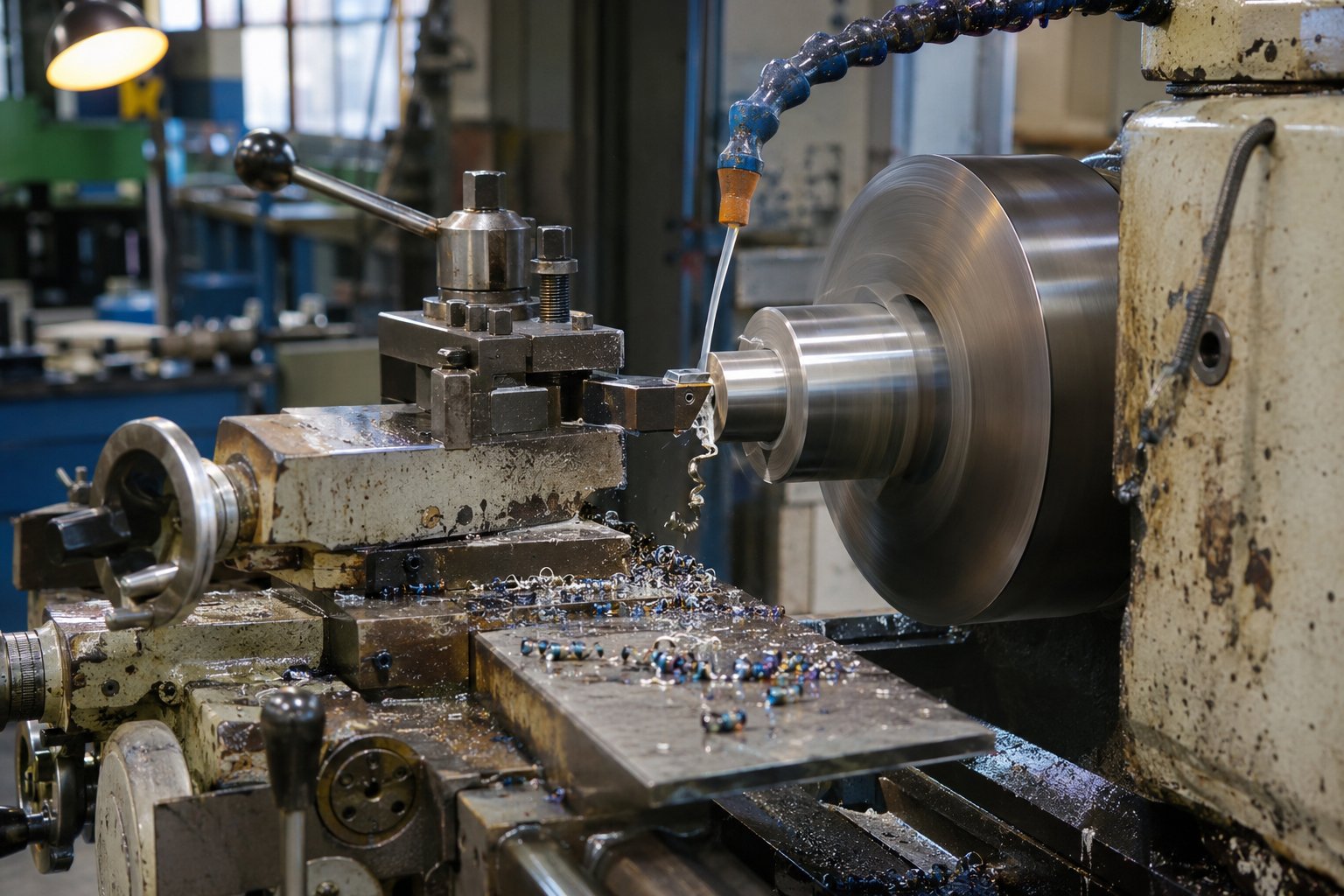
Metal lathe turning a steel shaft in a machine shop
Turning a steel shaft on a lathe: the part rotates while the cutting tool removes a thin layer of metal.
Welding

Joining metal by welding

Welding melts the edges of two pieces together, usually with an added filler metal, so that they form one solid joint after cooling. The method is chosen according to the material, the thickness and where the work is done.

MIG/MAG

A wire electrode is fed continuously with shielding gas. Fast and practical for steel frames, brackets and general fabrication.

TIG

A non-consumable tungsten electrode gives a clean, precise weld. Often used for stainless steel, aluminium and thin sheet.

Manual arc (MMA)

Coated stick electrodes, simple equipment. Suited for repairs and on-site work, including outdoors.

The quality of a weld depends on preparation as much as on the welding itself: clean surfaces, correct edge bevels, proper fit-up and suitable heat input. Finished welds are checked visually and, when needed, with other test methods.

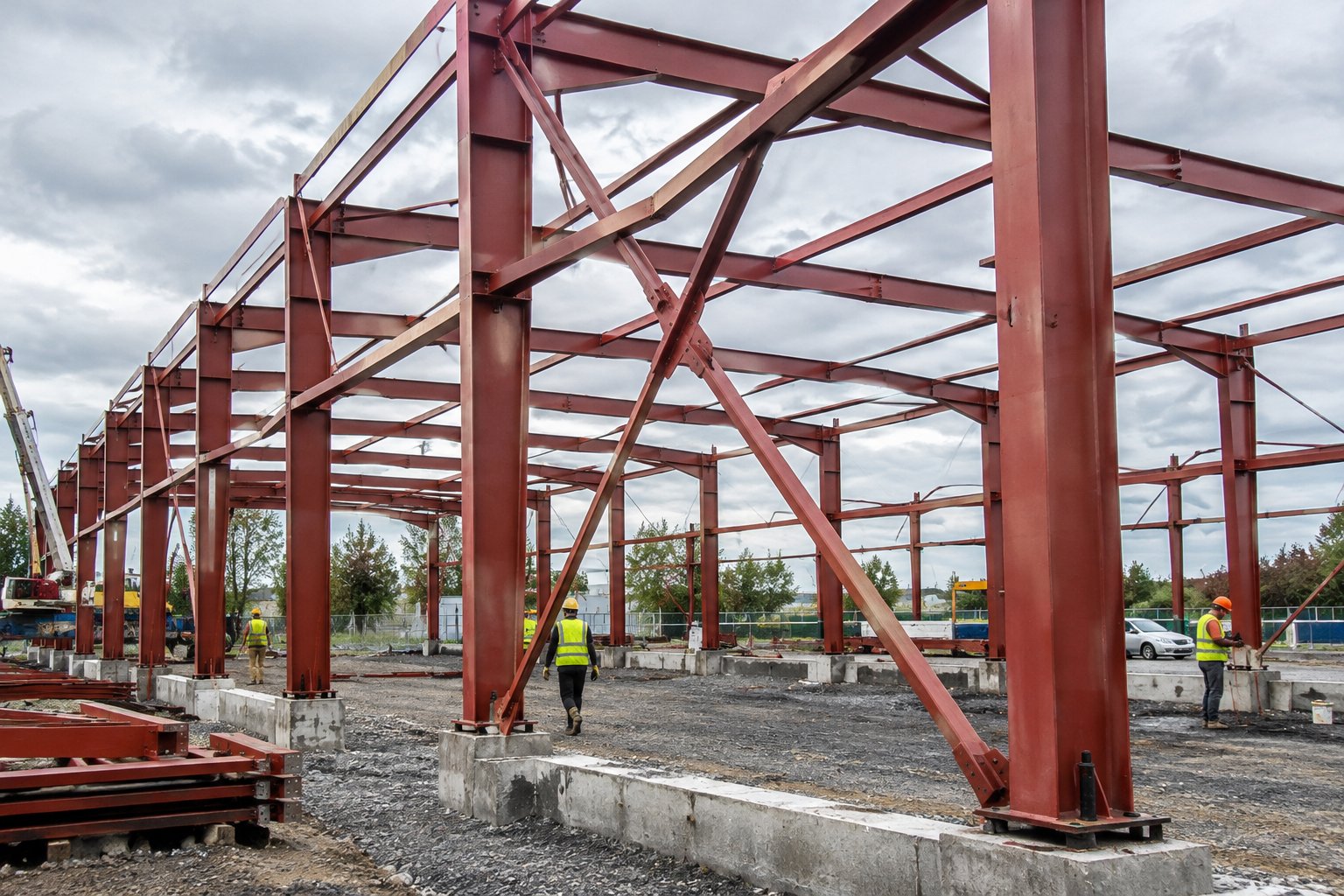
Braced steel frame of an industrial hall under construction
Columns, beams and diagonal bracing — the basic elements of a steel frame.
Fabrication

Manufacturing of metal structures

Metal structures are assemblies made from profiles, plates and pipes. They range from small supports and platforms to frames for halls, canopies and industrial equipment.

Typical elements include:

  • columns, beams and trusses;
  • stairs, railings and service platforms;
  • frames and bases for machines;
  • gates, fences and canopies.

Larger structures are usually made in sections at the workshop and bolted or welded together on site.

Materials

Common metals and their use

Each metal behaves differently during cutting and welding. The table gives a short overview.

MaterialMain propertiesTypical use
Structural steel (e.g. S235, S355)Strong, easy to weld, needs corrosion protectionFrames, beams, brackets
Stainless steelResistant to corrosion, harder to machineFood and process equipment, railings
AluminiumLight, conducts heat quickly, needs TIG or MIG with careCovers, light frames, housings
Hot-dip galvanized steelZinc coating protects outdoorsFences, outdoor structures

Surface protection

Steel parts are often blasted, primed and painted, or galvanized, depending on whether they will be used indoors or outdoors.

Drawings and tolerances

A clear drawing with dimensions, tolerances and material grade helps avoid misunderstandings before production starts.

Process

How a metalwork project usually goes

  1. Request and drawings

    The customer describes the part or structure and sends drawings, sketches or a sample.

  2. Technical review

    Material, dimensions, quantities and finishing are discussed and clarified.

  3. Cutting and machining

    Blanks are cut, then turned, milled or drilled to size.

  4. Welding and assembly

    Parts are fitted, welded and checked against the drawing.

  5. Finishing and handover

    Surface treatment is applied and the finished item is delivered or installed.

Safety and quality

Working safely with metal

Metalwork involves heat, sparks, sharp edges and heavy loads. Basic safety measures include protective clothing, welding helmets with the right filter, good ventilation to remove fumes, and safe lifting of heavy parts.

Quality is checked at several points: incoming material, dimensions after machining, weld appearance and fit, and the finished surface. In the European Union, load-bearing steel structures are generally made according to the EN 1090 standard, which defines requirements for fabrication and control.

Contact

Company details

For questions about metal machining, welding or metal structures, please use the details below.

CompanyVIRUMAA METALLITÖÖD OÜ
Registry code14912745
AddressNarva mnt 34, 41536 Jõhvi, Ida-Viru maakond, Estonia
Registered14.02.2020
Phone+372 337 4290
Email[email protected]